It’s a century of technology, everything in this world is experiencing the digital revolution. The use of computing, analytics and AI is leading everything to a more efficient and automatic way.
The connected devices taking action with relevant data is what we call Internet Of Things (IOT), the 3 indicators of IOT are sensor, intelligence and connectivity. Now if you still feel confused, let me give you a brief example on how IOT is used in medical industry. It’s a fact that many elders have problems with their hearing, so you can usually see an elder wearing a sound amplifier on the road. And when IOT comes to it, users can wear them while sleeping, and there will be a sensor device near their bed, the sound amplifier itself could detect the body condition of users, and when there comes an emergency, the sensor will transfer the data collected from amplifier to the hospital and prevent the happening of a worse condition.
Not just medical industry, it’s happening in every single area and it’s becoming a larger portion in each field. Today my focus is how IOT within supply chain is altering the industry. Modern technology shows one of its biggest advantages at object identification. The representative of the use of this technology is Radio Frequency Identification (RFID), in this passage we are going to talk about passive RFID and the use of UAD.
To achieve passive RFID system, the key components here are tags with antenna and RFID reader. When you see the tag, it seems like a normal tag with barcode.
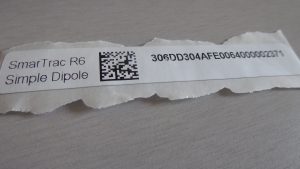
The core would show up after you uncover the tag, the back is not empty, you can see many antennas. The word passive means there is no power for these antennas, the only thing they do is to reflect signal from RFID reader so that we know the particular product with this tag is here.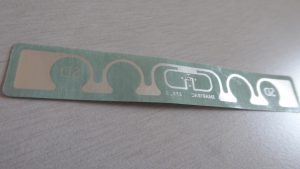
The whole process is you hold the RFID reader and scan your surrounding goods, and when the reader receives the signal reflected from the antenna then the particular good will be recorded in the system. Pretty easy right? Here comes its drawbacks. The first one would be the low accuracy. The closer you stay to tags, the stronger the signal will be, everything will be detected within 10’, some within 30’ and a few within 50’. One successful use of RFID would be automotive battery manufacturing. The traditional model would be truck visit the plant weekly and restock racks. After using RFID, the new system is shelf auto scan RFID tags nightly, and report via text, the restock only what is needed when needed. Another thing has to be mentioned is the expensive cost of RFID, the cost we see for RFID devices is only a tiny part of the whole expense, the most part comes from the integration with existing systems and transformation. The statistics also states that even you can afford the huge expense and risk, there is still a high chance of failure. It is good but only during the time it can be fully utilized.
UAD stands for unmanned aerial devices, it’s not really new but definitely digging a new field in supply chain. Take a look at the top in industry Amazon, 86% of amazon shipment <5 ibs is with airframe under 55 ibs within 10 miles.


